






Lyophilization Batch Control
Measuring Primary Drying and Secondary Drying in the Freeze Drying Process
Why Lyophilization Batch Control Matters
In pharmaceutical manufacturing, you rely on lyophilization to stabilize sensitive biological products. By removing water under controlled vacuum conditions, you can maintain product structure, potency, and shelf life. Because of this, you must carefully control the lyophilization cycle from start to finish. Many freeze dryers operate with tens of thousands of vials in a single run. In large production systems, a single batch may contain more than 100,000 vials and represent products worth several million euros/US dollars.
If you do not properly control the freeze-drying process, the consequences can be significant. Product collapse, excessive residual moisture, or loss of active ingredients can compromise product quality and result in the loss of an entire batch.
Lyophilization Batch Control Protects Product Quality
To prevent these risks, you must measure your products throughout the freeze-drying process. In practice, lyophilization batch control focuses on measuring product temperature during the entire freeze-drying cycle. This parameter gives you critical insight into product condition and helps you determine whether the process is progressing as expected.
Reliable batch measurements help you:
- Detect unexpected deviations during the process
- Identify the end of primary drying
- Optimize drying speed without risking product collapse
- Protect the quality and stability of the final product
By continuously measuring product temperature and process conditions, you gain the insight you need to control the freeze-drying process safely and efficiently.
Understanding the Lyophilization Cycle
Pre-Freezing, Primary Drying, & Secondary Drying: A typical lyophilization cycle removes water from your product in controlled stages. Each phase is designed to protect product structure while gradually reducing moisture content. The process typically consists of three main stages:
- Pre-freezing
- Primary drying
- Secondary drying
To achieve reliable batch control, you need to understand how your product behaves during each of these stages.
Control Pre-Freezing to Stabilize the Product Structure: During pre-freezing, you cool the product so that the water inside the formulation forms ice crystals. The freezing speed directly influences the structure of your final product. Slow freezing typically produces larger ice crystals that allow vapor to escape more easily during drying. Fast freezing produces smaller crystals and can result in slower drying. Another critical parameter is the collapse temperature, sometimes referred to as the eutectic temperature. You must freeze the product below this temperature before the drying phases begin.
Create the Right Conditions for Efficient Drying: By controlling product temperature during freezing, you ensure that the product structure supports efficient sublimation during the drying phases.
Control Primary Drying to Enable Efficient Sublimation: Once the product is frozen, you reduce the chamber pressure and begin primary drying. During this phase, ice is removed by sublimation, where solid ice converts directly into vapor without passing through the liquid phase. You gradually apply heat through the freeze dryer shelves to supply the energy required for sublimation. Your goal is to supply enough heat to sustain sublimation while ensuring that the product temperature remains below the collapse temperature.
Control Primary Drying to Protect Product Quality: Primary drying is typically the longest phase of the freeze-drying process and has the greatest impact on product quality. If the product temperature exceeds the collapse temperature, the product structure may collapse and compromise your entire batch. If you supply too little energy, the drying process becomes unnecessarily long. For this reason, you need reliable batch measurements during primary drying to ensure safe and efficient lyophilization batch control.
Control Secondary Drying to Remove Residual Moisture: After primary drying, your product still contains residual moisture that was not removed during primary drying. You remove this remaining moisture during secondary drying. During this phase, you typically increase shelf temperature while further reducing chamber pressure. Your goal is to remove the remaining water until the desired moisture level is achieved. For many pharmaceutical products, you must reduce residual moisture to well below 1% to ensure long-term stability.
Control Secondary Drying to Ensure Product Stability: By carefully controlling temperature and pressure during secondary drying, you ensure that your product reaches the desired moisture level while maintaining biological activity and stability.
Product Temperature Is the Key Parameter in Lyophilization Batch Control
The most reliable way for you to control product condition during freeze drying is by measuring product temperature. Product temperature reflects the balance between heat supplied by the shelves and the cooling effect created by sublimation. By measuring this parameter, you gain critical insight into how your product behaves throughout the entire lyophilization cycle.
Use Product Temperature to Understand Process Conditions
Product temperature depends on several factors:
- Product formulation
- Heat transfer from the shelves
- Chamber pressure
- Container type and vial geometry
With reliable batch measurements, you can ensure that your product remains within safe temperature limits throughout the drying process.
Ensure Correct Sensor Placement for Reliable Measurements
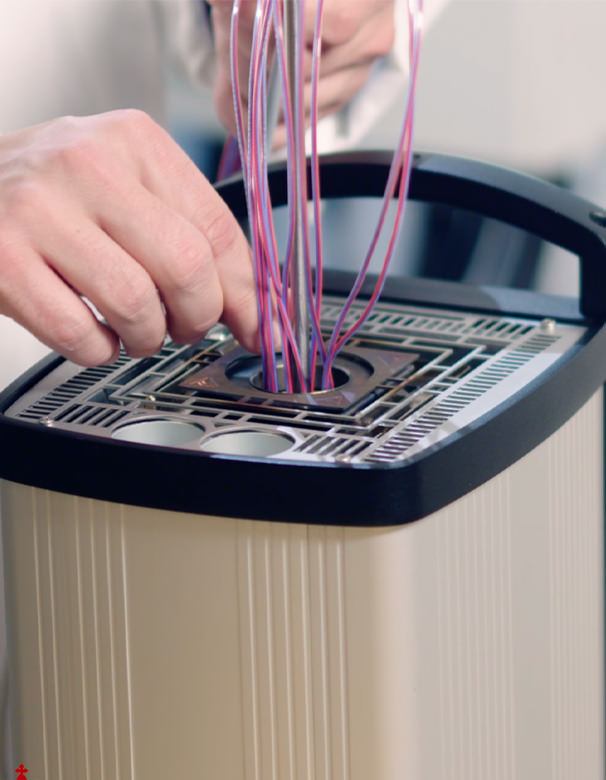
To obtain reliable product temperature measurements, you must carefully place sensors inside the freeze dryer. You should position sensors inside selected sample vials. Place the tip of the sensor close to the bottom center of the vial, where the last ice disappears during the drying process. Because the product dries from the top down, this position gives you the most reliable indication of when sublimation is complete.
Measure Multiple Locations Across the Shelf
To obtain representative measurements, you should place monitored vials at multiple locations across the shelf. Typical positions include:
- The four corners of the shelf
- The center of the shelf
These positions help you identify edge vial effects, where vials near the chamber walls may dry differently than those in the center of the batch.
Select Sensors That Minimize Measurement Impact
For lyophilization batch monitoring, you should use thin, minimally invasive sensors. Smaller sensors reduce their influence on product temperature and allow you to obtain measurements that more accurately reflect the behavior of the full batch.
Use the Right Tools for Lyophilization Batch Control
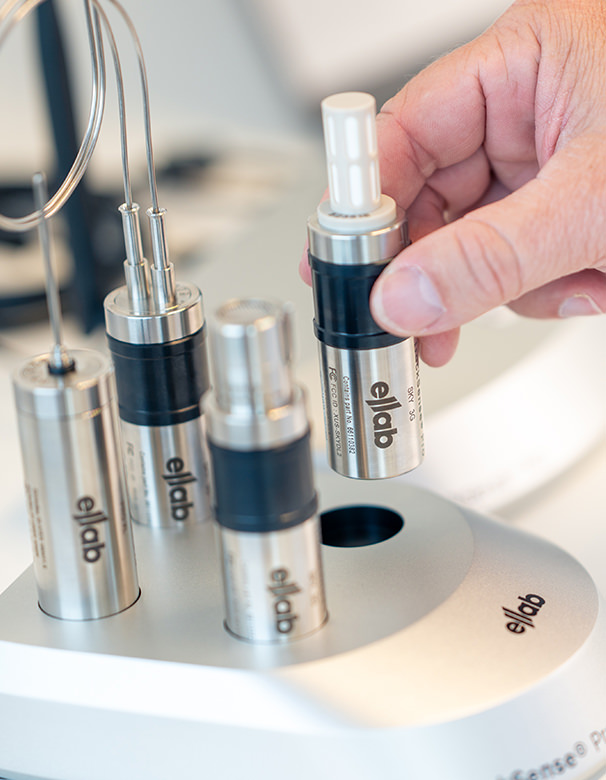
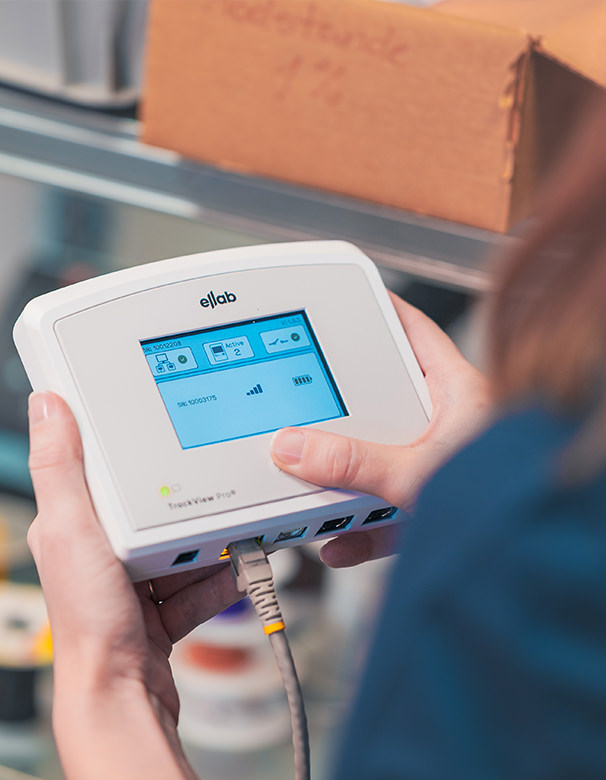
Reliable freeze-drying batch control depends on accurate and safe measurement of product temperature throughout the lyophilization cycle. You can place wireless data loggers directly inside the freeze dryer without compromising the chamber seal. These devices allow you to continuously measure product temperature during primary drying, secondary drying, and throughout the entire process. Live measurement data allows you to follow the process in real time and respond quickly if deviations occur.
Use Reliable Data to Enable Safe Process Control
When you have reliable product temperature data throughout the freeze-drying process, you can optimize drying time, avoid product collapse, and ensure consistent product quality across the entire batch.
Solutions for Lyophilization Batch Monitoring
To support your lyophilization batch control and validation, Ellab provides measurement solutions designed specifically for pharmaceutical freeze-drying: TrackSense® LyoPro.
With LyoPro, you can:
- Use special stoppers, sensors, and logger nests built for purpose
- Work with FDA 21 CFR Part 11 compliant software with automated validation summary reports
- Access live data and visualization of the lyophilization cycle
- Calibrate sensors yourself
- Maintain complete audit trail, data integrity, and user control
- Perform on-screen statistical calculations, limit alarms, heat maps, and graphs
Validation, Qualification, & Calibration Support
In addition to measurement equipment, Ellab provides global expertise to support your qualification, validation, and calibration of freeze dryers. Our specialists help you design validation studies, perform lyophilization batch control, and ensure reliable measurement throughout the freeze-drying process. Get in touch with our experts today.
- Why Lyophilization Batch Control Matters
- Lyophilization Batch Control Protects Product Quality
- Understanding the Lyophilization Cycle
- Product Temperature Is the Key Parameter in Lyophilization Batch Control
- Ensure Correct Sensor Placement for Reliable Measurements
- Solutions for Lyophilization Batch Monitoring