




Qualifying Dry Heat Sterilizers: Key Challenges & How to Address Them
Ensuring reliable depyrogenation validation in ovens and tunnels
Understanding Dry Heat Sterilization & Depyrogenation
Some pharmaceutical materials require dry heat sterilization because they are sensitive to moisture. In these cases, sterilization with steam could damage the product, making dry heat the preferred method. Dry heat processes can also be used to destroy pyrogens such as bacterial endotoxins. This process, known as dry heat depyrogenation, requires significantly higher temperatures and therefore careful process control.
To demonstrate reliable performance, pharmaceutical manufacturers must carry out dry heat sterilizer qualification (IQ/OQ/PQ) as well as depyrogenation validation studies.
Understand the Equipment Used for Dry Heat Processes
Dry heat sterilization systems are typically designed as ovens or heat tunnels, each suited for different pharmaceutical applications. A depyrogenation oven circulates filtered hot air around the load. These ovens vary in size and can easily reach volumes of several cubic meters.
A depyrogenation tunnel operates as a continuous process. A conveyor belt moves articles through heating and cooling zones while hot filtered air is blown vertically over the products. Because tunnels operate continuously and include moving components, depyrogenation process validation can present different challenges than qualification of static oven systems.
Control Temperature & Exposure Time
Temperature and exposure times are the most critical parameters in both dry heat sterilization cycles and depyrogenation cycles. Typical dry heat sterilization cycles operate between 160 °C and 190 °C, with exposure times ranging from 30 to 120 minutes.
For dry heat depyrogenation in ovens, the minimum requirement is typically 200 °C for at least one hour.
A depyrogenation tunnel often operates at significantly higher temperatures, typically 325 °C or even up to 400 °C. Because products move through the heating zone on a conveyor belt, exposure times are usually only a few minutes.
Maintaining precise temperature control throughout the depyrogenation cycle is therefore essential for reliable validation.
What Makes Dry Heat Validation Challenging?
Dry heat sterilization and depyrogenation processes present a set of challenges that must be carefully managed to ensure reliable qualification and validation.
- Extremely High Temperatures
Dry heat sterilization and depyrogenation processes operate at very high temperatures, making accurate temperature measurement essential. Sensors and measurement systems must be able to withstand these conditions while maintaining stable and reliable performance throughout the validation study. High temperatures also place significant demands on cables, sensors, and other components, making it critical to select equipment designed specifically for these environments. - Moving Parts & Long Measurement Distances
Qualification and validation become more complex when working with depyrogenation tunnels.
Unlike ovens, tunnels operate as continuous systems where products move through heating and cooling zones on a conveyor belt. Temperature measurements must therefore capture the conditions experienced by the product throughout the entire process.
When using wired sensors, cables often need to be routed through door seals or along the conveyor system, which can be difficult in systems with moving parts and long tunnels. - Maintaining Measurement Accuracy Through Calibration
Accurate temperature measurements are essential for reliable validation data.
To ensure this, sensors must be calibrated before validation studies and verified again after use. Regular calibration ensures that measurement data reflects actual process conditions and provides reliable documentation for regulatory inspections.
Typical accuracy requirements include:- ±0.5 °C for dry heat sterilizers
- ±1 °C for depyrogenation ovens and tunnels
Wired vs Wireless Validation Systems
Choosing the Right Measurement Approach
When qualifying dry heat sterilizers and validating depyrogenation processes, selecting the appropriate temperature measurement technology is an important consideration.
Both wired thermocouple systems and wireless data loggers are commonly used for validation studies. Each approach offers advantages depending on the equipment design and process conditions.
Wired Validation Systems
Wired validation systems have traditionally been used for validation of dry heat sterilizers and depyrogenation equipment.
Advantages
- High channel capacity for large validation studies
- Proven technology widely used in sterilization validation
- Suitable for large ovens where many measurement points are required
Challenges
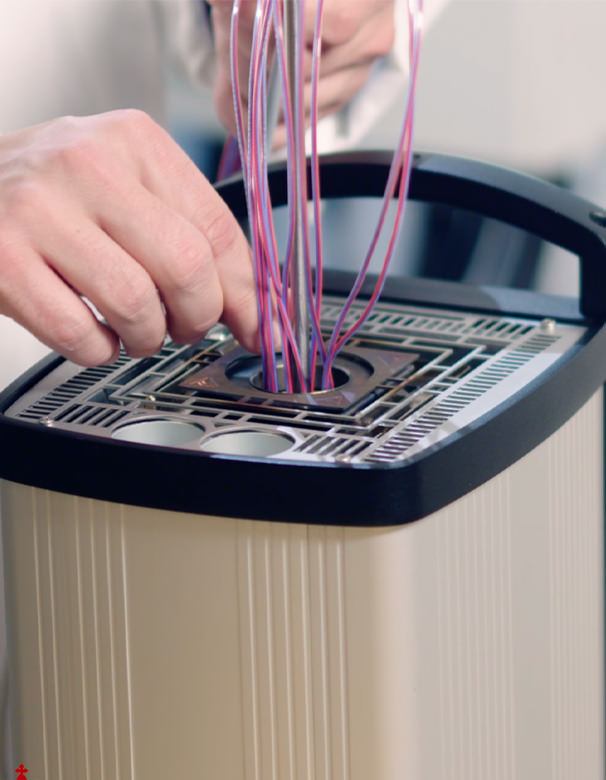
- Multiple cables must be routed through door seals or along tunnel conveyors
- Cables must withstand very high temperatures
- Specialized cables such as mineral insulated or Kapton cables are often required
- Cable management can become difficult in systems with moving components
Wireless Validation Data Loggers
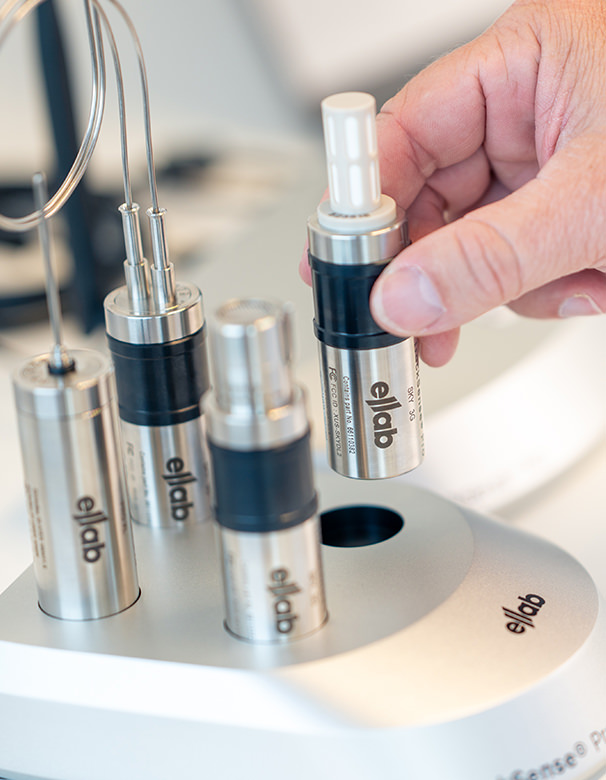
Wireless validation data loggers provide an alternative approach that can simplify validation studies, particularly in applications where cable routing is difficult.
Advantages
- No cables are required inside the sterilizer or tunnel.
- Faster and simpler setup of validation studies.
- Loggers can move with conveyor belts in depyrogenation tunnels.
- Reduced risk of interfering with seals or moving equipment.
Considerations
- Loggers must be protected from high temperatures using appropriate thermal barriers.
- Maximum temperature and exposure time must be considered to ensure proper protection.
In many depyrogenation tunnel applications, wireless data loggers provide clear advantages because they eliminate cable management challenges and allow measurements to follow the product through the process.
Validation The Ellab Way
- Choose between wireless data loggers or wired thermocouple systems operated in the same software.
- High measurement accuracy across the entire temperature range.
- FDA 21 CFR Part 11 compliant software.
- Reports for full documentation including Fh calculations.
- Integrated calibration capabilities within the software.
- Global experts ready to support or perform qualification and validation studies.
Talk to Our Experts
If you would like support with qualifications of dry heat sterilizers or validation of depyrogenation processes, Ellab experts are ready to help. With more than 400 trained experts worldwide, we have the expertise to support you in every process, anywhere in the world.