






RTDs vs Thermocouples
6 Key Differences That Might Change Your Preference
When choosing between Resistance Temperature Detector (RTD) temperature sensors and thermocouple temperature sensors, the decision isn’t always straightforward.
Both technologies measure temperature reliably, but the difference between RTD and thermocouple performance becomes critical when accuracy, stability, response time, and operating range directly affect your validation results. If you’re evaluating RTD vs thermocouple solutions for pharmaceutical validation, thermal processes, or controlled environments, understanding how they truly differ will help you select the right sensor for your application, not just the most familiar one.
RTD Temperature Sensors
How RTDs Work
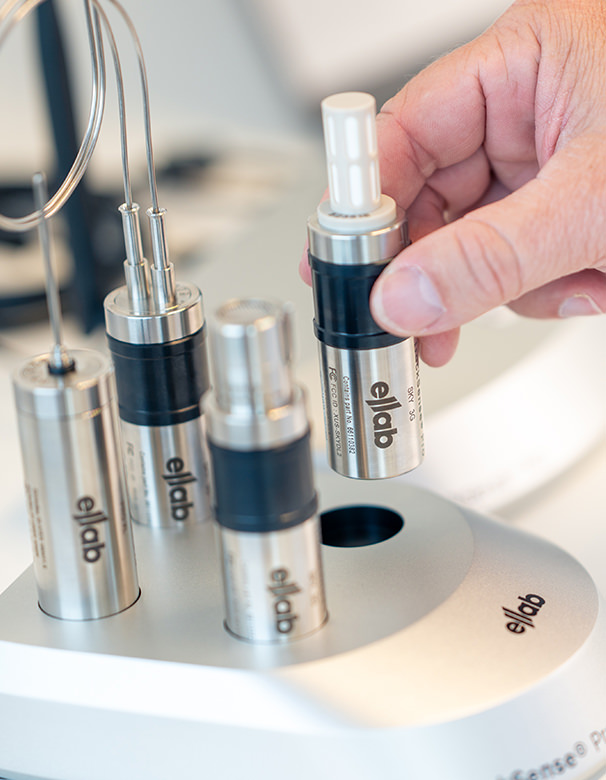
RTD temperature sensors measure temperature by correlating electrical resistance with temperature. As temperature changes, the resistance of the sensing element changes in a predictable and repeatable way. Most RTDs use platinum as the sensing material because of its stability and accuracy over time. This makes RTDs particularly suitable for applications where precision and long-term measurement stability are critical.
Why RTDs Are Known for Accuracy
One of the main advantages of RTD temperature sensors is their high accuracy and repeatability. They provide reliable measurements across moderate temperature ranges and are widely used in pharmaceutical validation, environmental chambers, stability testing, and controlled storage environments. RTDs also produce a stable and linear output signal, contributing to consistent measurement sensitivity across the operating range. This signal stability supports predictable calibration performance and long-term measurement confidence.
Use RTDs When:
- Measurement accuracy is critical
- Long-term stability is required
- Temperature ranges are moderate
- Calibration traceability is essential
Performance Limitations
RTDs typically have a slower response time compared to thermocouple temperature sensors and may not perform as well in extremely high-temperature environments. Because RTDs rely on a resistive sensing element, they are also more sensitive to mechanical stress and physical damage, which can affect durability in harsh industrial settings. If your application prioritizes precision, repeatability, and stability over extreme temperature range or rapid response, RTD temperature sensors may be the preferred solution.
Thermocouple Temperature Sensors
How Thermocouples Work
Thermocouple temperature sensors measure temperature by generating a voltage created by the junction of two different metals. When the junction experiences a temperature change, it produces a small electrical signal that corresponds to that temperature. Because they do not rely on resistance like RTD temperature sensors, thermocouples operate effectively across a much wider temperature range.
Why Thermocouples Are Valued for Range & Durability
Thermocouple temperature sensors are known for their wide temperature range, durability, and fast initial response. They perform well in high-temperature validation processes such as autoclaves, depyrogenation ovens, and other sterilization systems. Because thermocouples rely on two dissimilar metals, their signal output varies depending on the metal combination and temperature range. This characteristic influences overall accuracy and calibration requirements. Thermocouples are also mechanically robust and tolerate vibration, thermal cycling, and demanding industrial conditions better than most RTDs.
Use Thermocouples When:
- You need to measure very high temperatures
- Fast response time is important
- The environment is harsh or demanding
- Mechanical durability is a priority
Performance Limitations
Thermocouple temperature sensors typically provide lower accuracy and long-term stability compared to RTD temperature sensors. They may also require more frequent calibration due to signal drift caused by heat exposure, chemical exposure, or mechanical stress. Cold junction compensation, which is required for accurate thermocouple measurement, can also influence overall system response and measurement equilibrium. If your application prioritizes temperature range, durability, and response speed over ultra-high precision, thermocouples may be the preferred solution.
6 Key Differences Between RTDs & Thermocouples
When evaluating RTD vs thermocouple solutions, measurable performance characteristics should guide your decision.
- Measuring Range – Thermocouples offer the widest operating range: Most RTD temperature sensors are typically limited to temperatures up to 400–500°C. Certain thermocouple types can measure temperatures above 1400–1800°C, making them suitable for extreme thermal environments.
- Accuracy – RTDs deliver higher measurement precision: RTD temperature sensors can achieve accuracies within ±0.05 to ±0.1°C. Thermocouple temperature sensors typically offer accuracy around ±0.2 to ±0.5 °C depending on type and class.
- Sensitivity & Response Behavior – Response characteristics depend on system configuration: Thermocouples respond quickly at the hot junction, but cold junction compensation influences total system equilibrium. RTDs provide stable and predictable readings once equilibrium is reached.
- Drift & Long-Term Stability – RTDs provide superior long-term stability: RTDs exhibit minimal drift over time. Thermocouples experience higher drift due to heat exposure, chemical exposure, and mechanical stress, often requiring more frequent calibration.
- Single-Point Measurement Capability – Thermocouples allow highly localized measurement: Thermocouples measure precisely at the welded junction. RTDs measure across the platinum element surface, producing an average value.
- Cost Considerations – Initial investment vs life cycle cost: Thermocouples are often one half to one third the cost of RTDs initially. However, higher recalibration frequency may increase long-term costs of owning thermocouples.
The Bottom Line
If accuracy, repeatability, and long-term stability below approximately 500°C are critical, RTDs are often the stronger choice. If extreme temperature range, mechanical durability, and fast response are required, thermocouples may be more suitable. Select the sensor that aligns with your process risk and validation strategy.
Selecting Based on Performance, Not Preference
This comparison focuses exclusively on inherent sensor characteristics, not instrumentation features.
When RTDs Are the Stronger Choice
- Superior precision
- Excellent stability
- Minimal drift
- Linear and robust output signal
When Thermocouples Are the Better Fit
- Extreme temperature capability
- Mechanical durability
- Faster initial response
- Lower initial cost
Evaluate your decision against compliance requirements, lifecycle cost, and process risk.
What Ellab Offers
Enhancing Control & Predictability Across Your Validation Strategy: Selecting between RTD temperature sensors and thermocouple temperature sensors is not only a technical decision. It is a validation decision. Ellab supports you with an integrated approach that combines sensor technology, calibration expertise, and validation insight.
Sensor Solutions Designed for Regulated Environments: We provide both RTD temperature sensors and thermocouple temperature sensors engineered for pharmaceutical and regulated applications. Our solutions deliver measurement stability, traceability, and documentation confidence.
Calibration & Life Cycle Support: Ellab offers accredited calibration services to maintain accuracy, reduce drift-related risk, and ensure traceable measurement performance across the sensor life cycle.
Validation Expertise Aligned With Compliance: Our specialists help you evaluate RTD vs thermocouple technologies within the context of process requirements, regulatory expectations, and long-term operational strategy.
Software That Supports Documentation & Audit Readiness: Ellab’s validation software solutions structure and maintain measurement data to support audit readiness and regulatory inspections. Whether your process requires high-precision RTDs or durable thermocouples, Ellab helps you implement the right technology with full compliance confidence.