






The Lyophilization Theory & Process (Freeze Drying)
Cycle Stages and Validation Considerations
Lyophilization Is Not Just Freeze Drying
It’s About Process Control & Validation
The lyophilization process, also known as freeze drying, is widely used in the pharmaceutical industry to stabilize sensitive products such as vaccines, biologics, and injectable drugs. By removing water from frozen products through sublimation, lyophilization preserves the structure, potency, and long-term stability of pharmaceutical formulations. Because the lyophilization cycle involves multiple critical stages, precise control of the lyophilization temperature, pressure, and process timing is essential. Even small deviations can affect drying efficiency, product quality, and batch consistency.
Understanding the process and maintaining reliable continuous measurements help you ensure consistent product quality and regulatory compliance.
What Is the Lyophilization Process?
A Simple Explanation of the Freeze Drying Process
The lyophilization process removes water from frozen pharmaceutical products through sublimation. The product is first frozen, after which pressure is reduced and controlled heat is applied so that ice transitions directly from solid to vapor without passing through a liquid phase. This controlled process preserves the structure and stability of sensitive pharmaceutical formulations.
A typical lyophilization cycle consists of three main stages:
- Freezing
- Primary drying
- Secondary drying
Stages of a Freeze Drying Cycle
Understanding Freezing, Primary Drying, & Secondary Drying
A successful lyophilization cycle depends on controlling temperature, pressure, and time throughout the entire process.
- Product Preparation: Before freeze drying begins, the product is prepared and filled into vials or containers suitable for lyophilization. Proper preparation supports consistent freezing behavior and contributes to a stable lyophilization cycle.
- Freezing: During freezing, the liquid solution solidifies and forms ice crystals within the product matrix. The freezing step influences product structure and affects how efficiently moisture can later be removed during drying.
- Primary Drying: During primary drying, chamber pressure is reduced while controlled heat is applied to the shelves. Under these conditions, ice sublimates directly from solid to vapor, removing the majority of water from the product. This stage typically represents the longest phase of the lyophilization cycle. Maintaining the correct lyophilization temperature is critical to prevent product collapse or structural damage.
- Secondary Drying: Once most ice has been removed, secondary drying begins. During this stage, remaining bound moisture is removed by gradually increasing product temperature while maintaining low chamber pressure. This step reduces residual moisture and ensures long-term product stability.
Controlling & Measuring the Lyophilization Process
Ensuring Reliable & Repeatable Lyophilization Cycles
A lyophilization cycle cannot be controlled without reliable process data. Continuously measuring temperature and pressure throughout the process helps ensure that each stage remains within validated limits and performs as expected.
Controlling Lyophilization Temperature
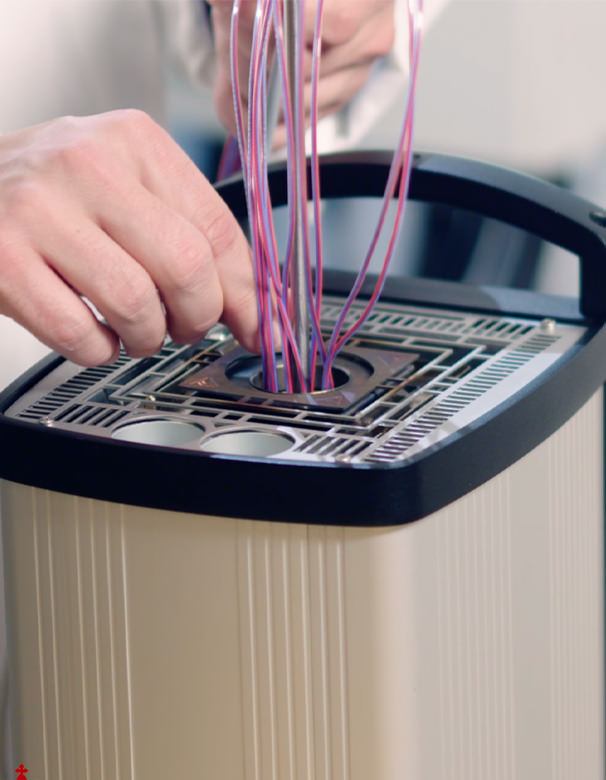
Product temperature is one of the most critical parameters during primary drying. Measuring the actual lyophilization temperature inside the vial ensures that the product remains below critical temperature limits and maintains its structure during sublimation.
Measuring Chamber Pressure
Chamber pressure determines how efficiently sublimation occurs during primary drying. Maintaining stable pressure conditions supports consistent drying performance throughout the freeze drying process.
Pressure Rise Test (PRT)
The pressure rise test (PRT) is commonly used to determine whether primary drying is complete. During a PRT, the valve between the drying chamber and condenser is temporarily closed. If ice remains in the product, sublimation continues and chamber pressure rises. Measuring this increase helps determine when the process can transition to secondary drying.
What Ellab Offers
Validating the lyophilization process requires more than measurement technology alone. It requires reliable hardware, structured data analysis, and experienced validation expertise. At Ellab, we support life science companies with integrated solutions designed to simplify validation, strengthen compliance, and improve operational efficiency.
Reliable Measurements for Lyophilization Processes
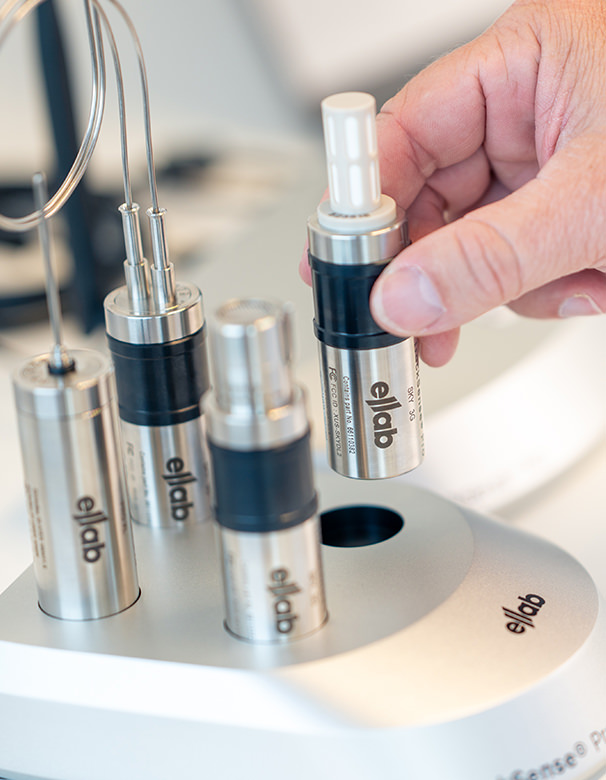
Accurate product temperature measurements are essential when validating the lyophilization process. Wireless data loggers such as TrackSense® LyoPro can be placed directly inside the freeze dryer to monitor the lyophilization temperature throughout the cycle without compromising the vacuum environment. This allows you to capture reliable product temperature data during every stage of the freeze drying process.
Structured Data Analysis with ValSuite®
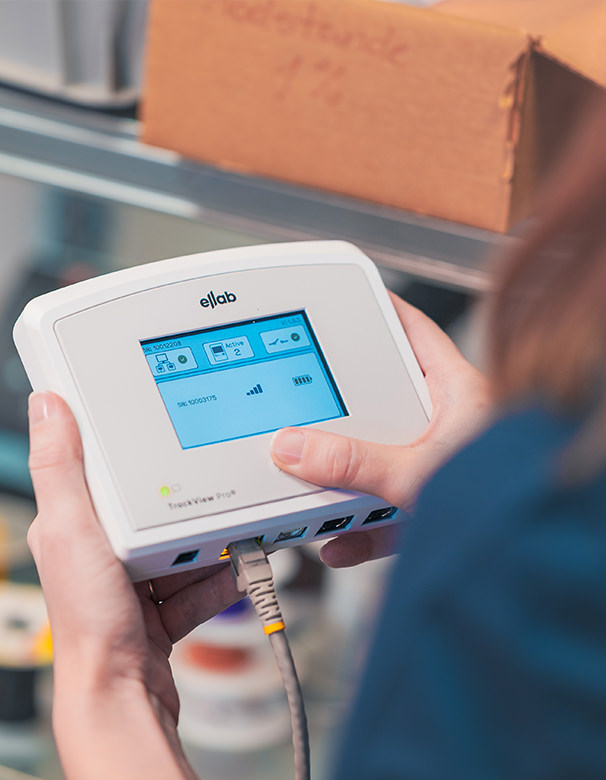
Ellab’s ValSuite® software helps you collect, analyze, and document validation data from freeze drying processes. The platform supports structured reporting and traceable documentation that helps you maintain regulatory compliance and audit readiness while simplifying the validation workflow.
Validation Services That Accelerate Your Qualification Work
Technology alone is not enough to ensure successful validation. Many organizations rely on experienced validation specialists to support qualification activities. Ellab’s validation field services provide full turnkey support, including:
- Validation equipment and sensors
- Protocol development
- On-site validation engineers
- Complete summary report documentation
By combining equipment, software, and experienced engineers, Ellab helps you streamline validation projects and complete your qualifications on time.
Your Life Science Compliance Partner
At Ellab, we combine advanced monitoring and validation technology with deep expertise to support the full life cycle of life science compliance. By combining measuring tools such as TrackSense® LyoPro, powerful validation software ValSuite®, and experienced validation specialists, we help you gain deeper insight into your lyophilization cycle while strengthening process control and compliance confidence.
Ellab – Your Life Science Compliance Partner.