




Control & Validation of the Steam Sterilization Process
Reliable Autoclave Sterilization in Pharmaceutical Manufacturing
Steam Sterilization in Pharmaceutical Manufacturing
Sterilization Is About Control, Not Just Heat
If you operate a steam sterilizer (autoclave) in pharmaceutical manufacturing, you rely on the steam sterilization process to eliminate microorganisms and protect product quality. Also known as the autoclave sterilization process, this method uses saturated steam sterilization to transfer heat efficiently to equipment, components, and production materials. When steam condenses on a cooler surface, it releases latent heat that destroys microorganisms through irreversible protein denaturation.
Because of its reliability and efficiency, moist heat sterilization remains one of the most widely used sterilization methods in pharmaceutical manufacturing. However, achieving reliable sterilization requires more than simply running a cycle. To ensure consistent results, you must control and document the conditions inside the sterilizer throughout the entire process.
Successful Sterilization Depends on More Than Temperature
A reliable steam sterilization process depends on several parameters working together. Temperature is critical, but it is only one part of the equation. Time, pressure, steam quality, air removal, and proper steam contact with the load all influence whether sterilization conditions are achieved. Even small deviations can compromise sterility assurance, product quality, and regulatory compliance. This is why steam sterilization validation and proper steam sterilizer qualification (IQ/OQ/PQ) are essential in pharmaceutical environments. To demonstrate that your sterilization cycles perform reliably, you must monitor critical parameters throughout the chamber and document the results in a structured and traceable way.
How the Steam Sterilization Process Works
Reliable Sterilization Requires Controlled Conditions: The effectiveness of the steam sterilization process depends on controlling several key parameters.
The most critical parameters include:
- Time
- Temperature
- Pressure
- Steam quality and moisture
- Air removal
- Drying
Each of these parameters influences whether the sterilization cycle achieves the required sterility assurance level.
Time & Temperature Drive the Sterilization Effect: Microorganisms are not destroyed instantly when exposed to heat. Sterilization effectiveness depends on maintaining a defined temperature for a specific exposure time. The relationship between time and temperature determines the lethality of the process.
For many moist heat sterilization cycles, commonly validated conditions include:
• 121 °C for approximately 15 minutes
• 134 °C for approximately 3 minutes
Moist heat sterilization uses saturated steam under pressure to effectively destroy microorganisms on medical instruments and equipment. Standard sterilization cycles are designed to achieve a 6-log reduction in highly resistant bacterial spores, including Geobacillus stearothermophilus, resulting in a Sterility Assurance Level (SAL) of 10⁻⁶. Both combinations can achieve the required microbial reduction when properly validated. Because of this relationship, accurate temperature measurement is essential when performing steam sterilization validation.
Pressure Confirms Saturated Steam Conditions: In a steam sterilizer, pressure and temperature are closely linked. Measuring both parameters helps confirm that the chamber contains saturated steam, which is necessary for efficient heat transfer during sterilization. By comparing measured temperature with the theoretical temperature derived from chamber pressure, you can verify that proper saturated steam conditions are present. If air or non-condensable gases remain inside the chamber, sterilization effectiveness may be reduced.
Steam Quality Determines Heat Transfer: Effective sterilization requires high-quality saturated steam. When steam condenses on a surface, it releases significant thermal energy. This heat transfer destroys microorganisms and ensures reliable sterilization. If steam becomes superheated or contains excessive non-condensable gases, heat transfer efficiency decreases and sterilization conditions may not be achieved in all areas of the load. Maintaining proper steam quality is therefore essential for reliable saturated steam sterilization.
Steam Contact Ensures Complete Sterilization: For sterilization to occur, steam must come into direct contact with all surfaces of the load. If steam cannot reach certain areas, those surfaces may not receive sufficient heat exposure. Proper load configuration, chamber design, and airflow management help ensure complete steam penetration. Consistent loading patterns also improve the repeatability of the steam sterilization process during validation studies.
Air Removal Enables Steam Penetration: Air is one of the biggest obstacles to successful sterilization. Air pockets inside the chamber or load prevent steam from contacting contaminated surfaces. Most modern steam sterilizers therefore use vacuum pulses before sterilization begins. These vacuum cycles remove air from the chamber and allow saturated steam to penetrate the entire load. Routine testing, such as the Bowie Dick test, helps you verify that vacuum performance and air removal are functioning correctly.
Drying Prevents Recontamination: Once sterilization is complete, the load must be properly dried before leaving the chamber. Residual moisture can allow microorganisms from the surrounding environment to contaminate sterilized materials. Most sterilization cycles therefore include a vacuum drying phase that removes remaining condensate and ensures materials leave the sterilizer in a stable condition.
Measuring & Controlling the Steam Sterilization Process
Providing Documented Proof of Sterilization
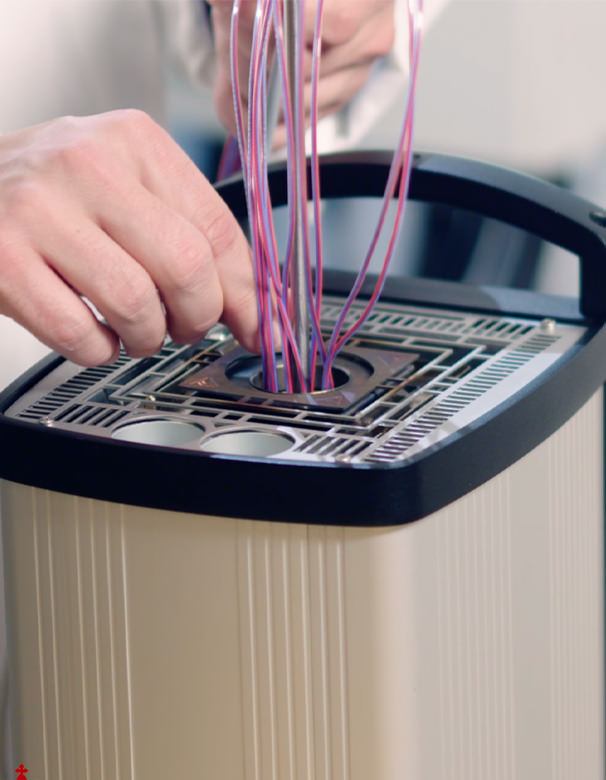
In pharmaceutical manufacturing, sterilization must be demonstrated, not assumed. To prove that the steam sterilization process consistently achieves the required conditions, you must measure critical parameters throughout the sterilization cycle. This typically involves measuring temperature and pressure at multiple locations inside the chamber and load. Doing so helps you identify cold spots, detect deviations, and confirm that sterilization conditions are achieved everywhere in the sterilizer.
Routine verification tests also support reliable process control. The Bowie Dick test, for example, verifies that vacuum sterilizers can remove air effectively and allow proper steam penetration. Together, monitoring and routine testing provide the documented evidence required for steam sterilization validation.
Steam Sterilizer Qualification (IQ/OQ/PQ)
Qualification Confirms Autoclave Performance
Before a steam sterilizer can be used in regulated pharmaceutical manufacturing, it must undergo a defined steam sterilizer qualification procedure. Qualification activities confirm that the equipment is installed correctly, operates within defined limits, and consistently achieves sterilization performance during routine operation.
- Installation Qualification (IQ): Installation Qualification verifies that the steam sterilizer (autoclave) has been installed according to manufacturer specifications and facility requirements. This includes verifying utilities, instrumentation, and system configuration.
- Operational Qualification (OQ): Operational Qualification confirms that the sterilizer operates within its defined process parameters. Testing during OQ verifies that the system can achieve and maintain the required temperature, pressure, and cycle conditions throughout the chamber.
- Performance Qualification (PQ): Performance Qualification demonstrates that the sterilizer can reliably sterilize representative production loads. During PQ, validation runs confirm that sterilization conditions are achieved throughout the chamber and load configuration. Calibration of temperature sensors before and after validation studies helps ensure measurement accuracy and traceability.
Using the Right Validation Equipment
Accurate Measurement Enables Reliable Validation
Successful steam sterilization validation depends on accurate measurement of process conditions throughout the sterilizer. Wireless data loggers are recommended to perform the necessary qualifications, as wired validation systems take longer to set up and create a leakage risk. Data loggers are also easier to scale to the size of the chamber. You can place them throughout the load on various shelves and at critical points such as drains and internal sensors without having to attach additional cables.
Both options can provide live data and the software required for reporting and documentation, which helps you demonstrate compliance. Reliable validation equipment helps document the performance of the autoclave sterilization process and support regulatory compliance.
What Ellab Offers
Integrated Solutions for Sterilization Validation
Validating the steam sterilization process requires reliable measurement technology, structured data analysis, and experienced validation expertise. Ellab provides integrated solutions designed to support steam sterilizer qualification and steam sterilization validation while simplifying the validation workflow.
TrackSense® Wireless Data Loggers
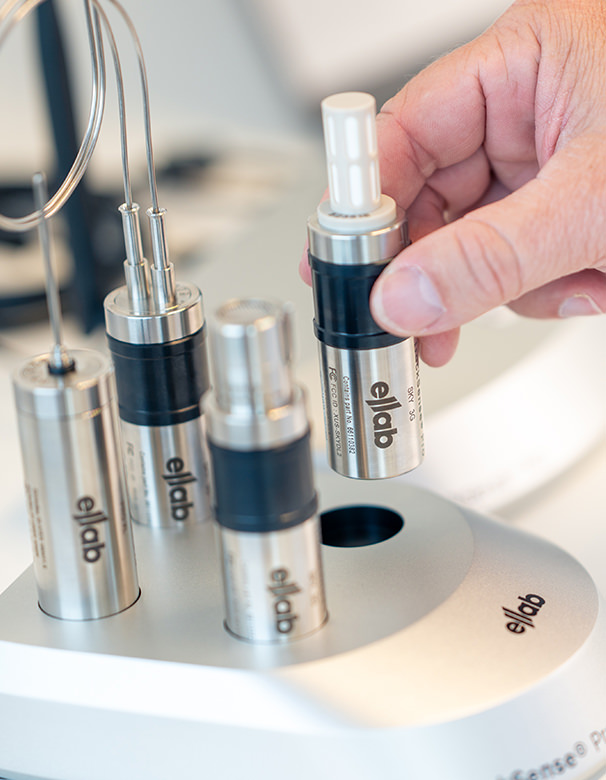
Ellab’s TrackSense® wireless data loggers provide highly accurate temperature and pressure measurements during sterilization validation studies. Their compact design allows you to place them throughout the sterilizer chamber and load, helping you identify temperature distribution and verify sterilization conditions.
ValSuite® Validation Software
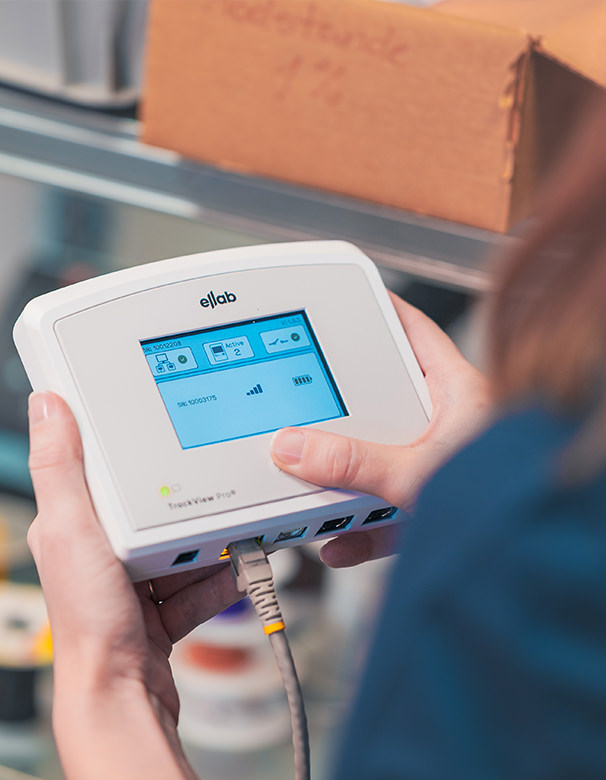
The ValSuite® software supports structured data collection, analysis, and reporting for sterilization validation. The platform is FDA 21 CFR Part 11 compliant and includes automated analysis, customizable reporting templates like DIN EN 285, DIN EN 17665, or DIN EN 13060 reports as well as an air leakage report, and integrated calibration tools that help ensure sensor accuracy. These features help generate inspection-ready documentation and support efficient validation workflows.
SteriSense® Electronic Bowie Dick Testing
For routine verification of air removal performance, SteriSense® provides an electronic solution for Bowie Dick testing. The system uses a Process Challenge Device (PCD) designed to simulate steam penetration conditions inside vacuum sterilizers. This allows objective and repeatable verification of air removal capability. The device is EN ISO 11140-4 compliant and designed to support efficient routine testing without long cooling periods between cycles.
Ready to Simplify Sterilization?
From validation to calibration and monitoring, our integrated solutions help you streamline sterilization qualification, simplify documentation, and strengthen compliance confidence. Get in touch with our experts today